
Unit Price Math: The Grocery Shelf Tag Detail Most Shoppers Ignore
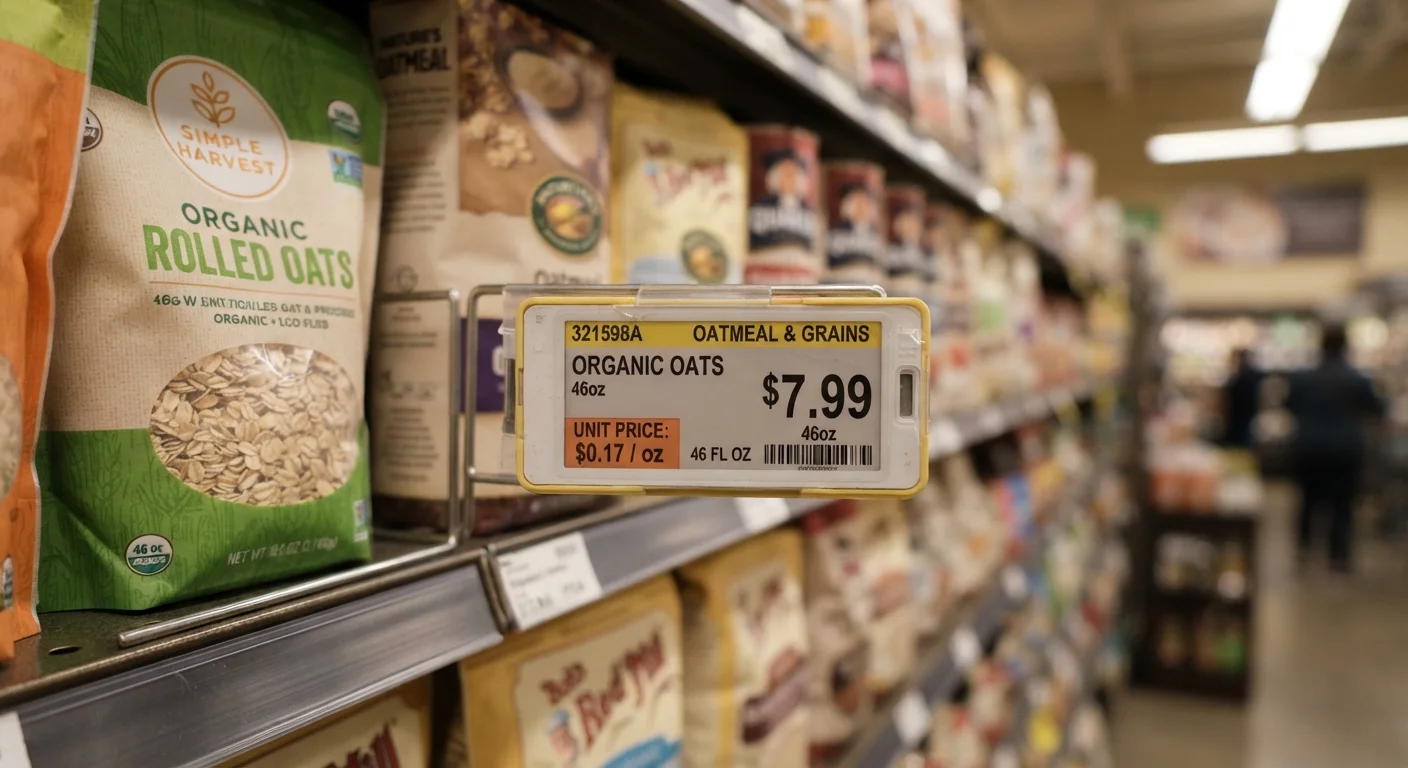
Photo credit: lifestyle-insights.com
In this article
Unit pricing reveals the true cost of what you buy. Learn how to read shelf tags accurately and use unit price comparisons to stretch your grocery budget.
Key Takeaways
- Unit price appears on most grocery shelf tags as a small figure, usually in the lower corner.
- A lower total price does not always mean a lower unit price.
- The unit of measure must match when comparing two products directly.
- Store brands and larger sizes often have lower unit prices, but not always.
- Buying the lowest unit price only saves money if you actually use the product before it expires or spoils.
What the shelf tag is actually telling you
Every grocery shelf tag carries two prices. The large number is the total price you pay at the register. The small number, often tucked into a corner of the tag, is the unit price. Most shoppers read the big number and move on. The small number is where the actual comparison lives.
Unit price expresses cost as a ratio: total price divided by the quantity in the package. A 32-ounce jar of pasta sauce priced at $4.00 has a unit price of $0.125 per ounce. A 24-ounce jar at $3.36 has a unit price of $0.14 per ounce. The smaller jar costs less at the register, but you pay more for every ounce of sauce you get. That gap adds up across a full cart.
Retailers use several different units depending on the product category: weight (ounces, pounds), volume (fluid ounces, liters), or count (per sheet, per tablet, per diaper). Paper towels might be priced per square foot. Vitamins are often priced per tablet. The unit chosen can obscure comparisons if you are not paying attention.
Units must match for a valid comparison
Comparing unit prices only works when both tags use the same unit of measure. If one product is listed per ounce and another per pound, you need to convert before comparing. Some retailers standardize units across a product category; others do not. When tags show different units, do the conversion manually or skip the comparison rather than guess.
When unit price comparisons can mislead you
Unit price math assumes you will use all of what you buy. That assumption breaks down with perishable foods. A five-pound bag of spinach may have a lower unit price than a one-pound bag, but if three pounds go into the trash, the effective price per usable ounce is much higher. The math behind bulk buying depends heavily on actual consumption, not just what fits in the cart.
Unit of measure mismatches create another trap. If one brand lists unit price per ounce and a competing brand lists per pound, a quick glance will not give you the right answer. Multiply the per-ounce price by 16 to convert it to per-pound, or divide the per-pound price by 16 to convert the other direction. Some stores handle this conversion automatically on the tag; many do not.
Sales complicate the picture too. Shelf tags sometimes lag behind promotional pricing, so the printed unit price may not reflect a current markdown. When a product is on sale, divide the sale price by the package quantity to get the real unit price for that week.
~30%
Shoppers who regularly check unit prices
Consumer survey data from the Food Marketing Institute has historically found that a minority of U.S. grocery shoppers actively use unit pricing to make purchase decisions, despite its wide availability on shelf tags.
38 states
U.S. states with some form of unit pricing law
As of data compiled by consumer advocacy organizations, most U.S. states have unit pricing requirements, though the scope and enforcement vary significantly by jurisdiction.
Applying unit price comparison in practice
The fastest way to build this habit is to focus on the categories where your household spends the most: dairy, protein, cleaning supplies, and pantry staples. These items appear on nearly every shopping trip, so small unit-price differences compound over time. Recurring small choices at the store accumulate faster than most families expect.
Store-brand products often carry lower unit prices than name-brand equivalents in the same size, but that is not a rule. Promotional sales on name brands sometimes push them below the store-brand unit price temporarily. Checking the tag rather than defaulting to one brand or the other takes seconds and removes guesswork.
For non-perishable goods where storage space is not a constraint, a lower unit price in a larger size is a straightforward win. Canned goods, dry pasta, rice, and similar items have long shelf lives, so buying the size with the lowest unit price makes direct sense. For fresh produce, meat, and dairy, factor in your household's actual weekly usage before sizing up.
A shopper sees two bottles of dish soap side by side: a 20-oz bottle for $2.50 and a 32-oz bottle for $3.68.
A family compares two yogurt brands: a 6-oz single-serve cup at $1.29 and a 32-oz tub at $5.49.
Paper towels are listed with unit prices per sheet on one brand and per square foot on another.
A name-brand cereal is on sale, dropping from $5.49 to $3.99 for a 16-oz box, while the store-brand 18-oz box stays at $3.29.
Connecting unit price to your broader grocery budget
Unit price awareness is one input into grocery spending, not the whole picture. Common patterns behind grocery budget overruns often come from planning gaps and impulse decisions rather than a failure to check shelf tags. Unit price comparisons work best when paired with a shopping list and a general spending target.
If your household is building a grocery budget for the first time, a practical starting framework for grocery budgets can help you set a realistic baseline before you start optimizing individual line items. Knowing your per-trip target makes it easier to decide when a lower unit price on a larger size is worth the upfront cash and when it is not.
Reading unit prices sits alongside other shelf-tag skills. Reading nutrition labels accurately rounds out what the packaging is communicating, so cost and nutritional value can both inform what goes in the cart.
Frequently Asked Questions

Author
Shopping Editorial Team
Shopping Editorial Team is the collective byline for our editorial team and contributor network. Articles published under this byline or an editorial pen name are researched, written, and reviewed according to our editorial standards for clarity, consistency, and independence before publication.
View all articles →