
Cashback Apps, Loyalty Cards, and Coupons: Picking the Right Savings Tool for Your Household
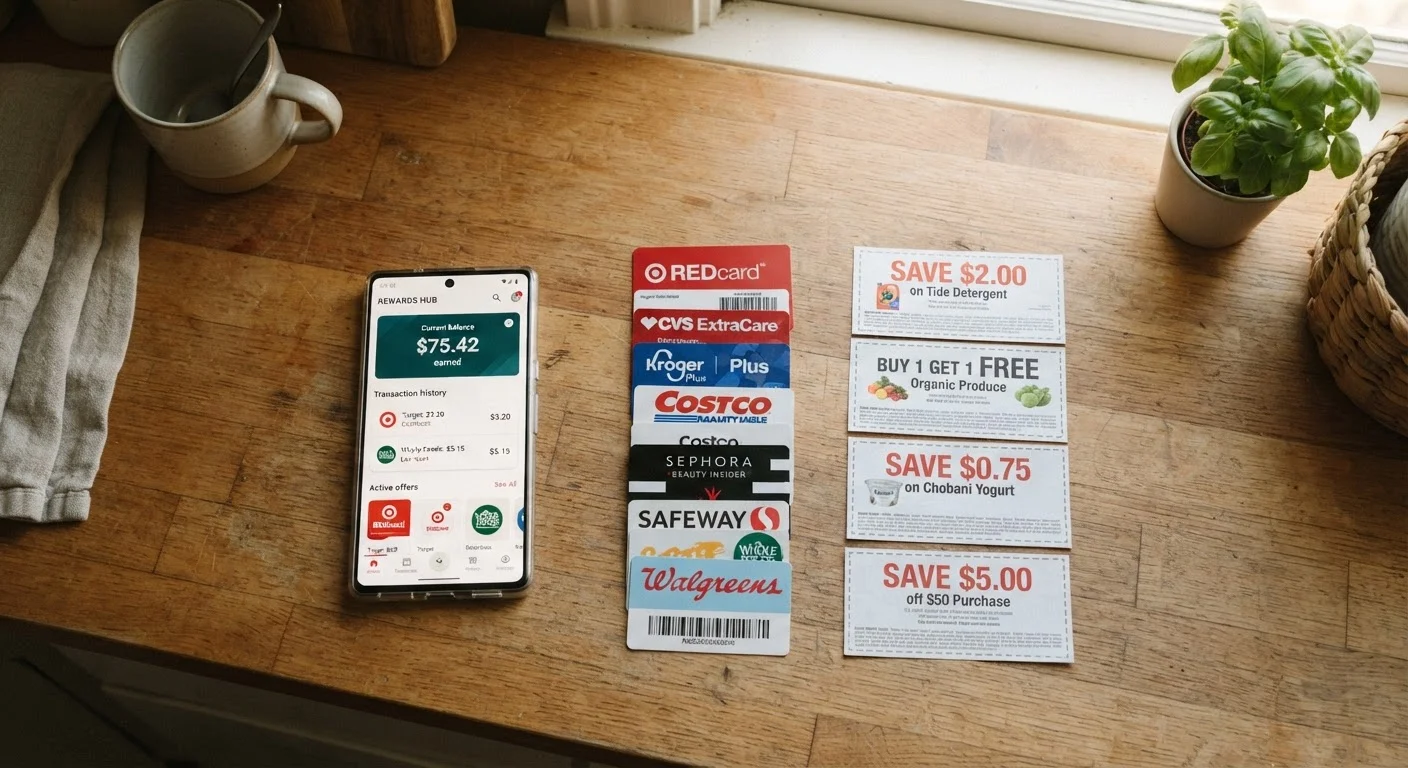
Photo credit: lifestyle-insights.com
In this article
Not every savings tool works the same way. Compare how cashback apps, store loyalty programs, and paper or digital coupons each deliver value for families.
Key Takeaways
- Cashback apps work best for households that shop across multiple stores and categories regularly.
- Loyalty cards deliver the most value when you concentrate spending at a small number of stores.
- Coupons, paper or digital, reward planned purchases and work poorly for impulse shopping.
- Stacking multiple tools on one purchase is possible and can multiply savings without extra effort.
- Time cost matters: some tools take longer to set up or redeem than the savings justify.
What each tool actually does
Savings tools are not interchangeable. Each one captures value at a different point in the shopping process, and each requires a different level of effort to use well.
Cashback apps work by linking your payment card or receipt scan to a rebate system. You shop normally, submit proof of purchase, and receive a percentage of the total back, usually deposited as cash or transferred to a payment account. The rebate arrives after the purchase, sometimes days or weeks later.
Loyalty cards (store reward programs, whether physical cards or app-based accounts) track spending at a specific retailer and convert it into points, fuel discounts, or in-store credit. The retailer benefits from the purchase data; you benefit from accumulated rewards over time.
Coupons reduce the price at the register. Paper coupons require clipping and presenting at checkout. Digital coupons clip to a loyalty account or are applied via a code. Both types reduce what you pay in the moment rather than returning money afterward.
Understanding this distinction matters because the timing of the benefit changes how you should use each tool. For practical ideas on reducing recurring costs, pairing the right savings tool with each category of spending makes a measurable difference.
Where each tool performs well and where it falls short
Cashback apps are genuinely flexible. Because many work across any retailer where you swipe your card, they suit households with varied shopping patterns. The trade-off is that rebate rates are usually small (commonly 1 to 5 percent on everyday categories) and the payout delay means you do not feel the savings at checkout. Some apps also require minimum balances before you can withdraw, which can frustrate occasional users.
Loyalty cards perform well when your household already concentrates spending. A family that buys groceries at the same chain every week and fills up at the affiliated gas station can accumulate enough points to offset a meaningful portion of the grocery bill over a month. The problem is that chasing points at a store you would not otherwise visit erases the savings, and some programs expire points after a period of inactivity.
Coupons are the most direct tool but the most time-sensitive. They work well for planned grocery trips where you know in advance what you need. Digital clip-to-card coupons from grocery apps have lowered the time cost considerably compared to paper clipping. However, coupons can push you toward buying larger sizes or brands you do not need, which is a pattern worth watching. The habits that quietly undermine a grocery budget often include coupon-driven purchases that were not on the original list.
| Cashback apps | Loyalty cards | Coupons | |
|---|---|---|---|
| When you receive the benefit | After purchase (days to weeks) | Accumulated over time | At checkout, immediately |
| Effort to set up | One-time card link | One-time enrollment | Ongoing clipping required |
| Works across multiple stores | Yes, card-linked options do | No, tied to one retailer | Varies by coupon source |
| Risk of driving unplanned spending | Low | Moderate (store loyalty) | Higher (deal-driven purchases) |
| Best cart size | Any size | Large, regular carts | Medium to large planned carts |
| Typical savings rate | 1 to 5 percent back | Varies widely by program | Fixed discount per item |
Stacking tools without overcomplicating your routine
The strongest savings outcome usually comes from combining tools on the same purchase. A common example: clip a digital coupon through a grocery chain's app (reducing the shelf price), pay with a card linked to a cashback app (earning a small rebate), and let the purchase accumulate loyalty points. Three layers, one transaction, no extra time at the register.
The practical limit is setup time. If managing three apps before every shopping trip takes 20 minutes, the effort cost may outweigh modest savings on a small cart. A reasonable approach is to set up cashback card links once and leave them running passively, while reserving active coupon clipping for the weekly grocery trip where volume makes it worthwhile.
Families who also travel should note that similar stacking logic applies to travel spending. The strategies budget-savvy families use on road trips often include earning cashback or points on fuel and lodging purchases without changing where they were already planning to spend.
Set cashback links once and leave them
Most card-linked cashback programs only need a one-time setup. Once your payment card is connected, rebates accumulate without any action at checkout. Reviewing linked offers once a week, rather than before every trip, keeps the time cost low while still capturing available rebates.
Before committing to a new loyalty program, check whether you already spend enough at that retailer to reach meaningful reward thresholds. Programs with high minimum redemption values can sit idle for months in smaller households. For a broader framework on evaluating purchases before you add them to the cart, see the household shopping decision checklist.
Which setup fits which household type
A family with four or more people, a predictable grocery routine, and a preferred chain will likely see the clearest return from loyalty cards, supplemented by the chain's own digital coupons. The volume of weekly spending accelerates point accumulation, and the routine removes decision fatigue.
A smaller household or one that shops across multiple stores (warehouse clubs, discount grocers, online retailers) will find cashback apps more useful because the rebate follows the card rather than the store. There is no loyalty penalty for splitting a cart across two retailers.
Households running a tight budget where every dollar of the grocery line matters may still find that clipping high-value coupons on specific staples, even paper ones, returns more per item than the fractional percentages from other tools. The math depends on your cart size and what is on sale.
This question connects to broader spending decisions. Whether you also buy in bulk, for instance, affects whether large-size coupon deals make sense for your storage situation. The analysis in why bulk buying saves some families money and costs others more runs through that trade-off in detail.
This article is for general informational purposes only and does not constitute financial or purchasing advice. Savings results vary based on individual spending habits, program terms, and retailer availability. Consult program terms directly before enrolling.

Author
Shopping Editorial Team
Shopping Editorial Team is the collective byline for our editorial team and contributor network. Articles published under this byline or an editorial pen name are researched, written, and reviewed according to our editorial standards for clarity, consistency, and independence before publication.
View all articles →