
Why Bulk Buying Saves Some Families Money and Costs Others More
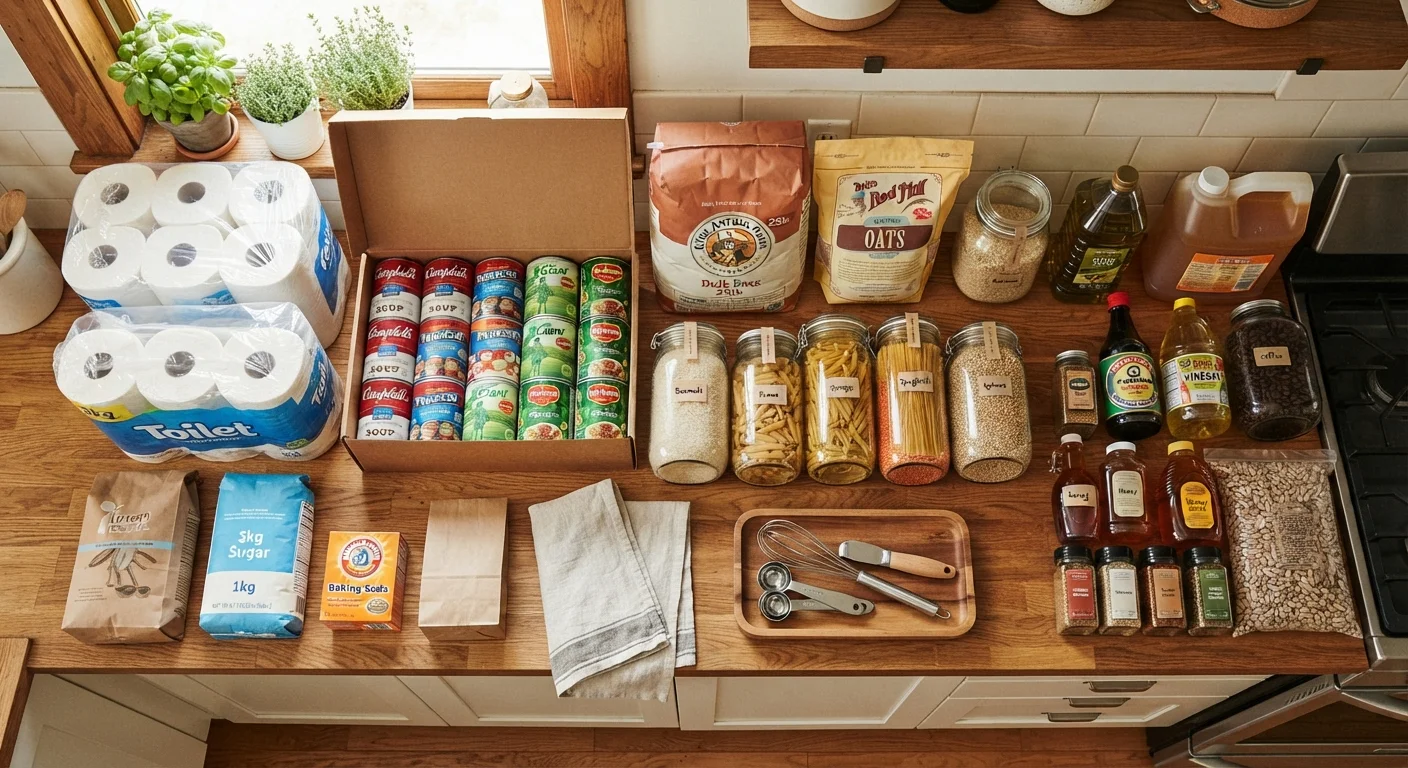
Photo credit: lifestyle-insights.com
In this article
Buying in bulk sounds like a no-brainer, but the math depends on your household size, storage space, and spending habits. Here is what to weigh before you stock up.
Key Takeaways
- Bulk buying lowers the per-unit cost, but only saves money if the product gets used before it expires or goes to waste.
- Household size and storage space are the two factors that most determine whether bulk buying helps or hurts a budget.
- Membership fees at warehouse clubs reduce net savings and must be factored into any honest cost comparison.
- Non-perishable and frequently used items are generally where bulk purchasing delivers real value.
- Impulse buying at warehouse stores is a common way families end up spending more, not less.
Lower cost per unit on non-perishable staples
Buying toilet paper, laundry detergent, or canned goods in large quantities typically reduces what you pay per unit. For items with a long shelf life and predictable use, that difference adds up over a year.
Fewer restocking trips save time and fuel
Stocking up on frequently used items means fewer separate shopping trips. That reduction in travel has a real cost attached to it, particularly for families without a warehouse club nearby.
Price stability against short-term inflation
Buying ahead when prices are stable can insulate a household from temporary price increases on specific products. This applies mostly to shelf-stable goods with predictable demand.
Useful for large households with high consumption
Families of four or more burning through staples quickly are the profile bulk buying fits. High turnover reduces the risk of waste and makes the per-unit savings fully realisable.
Food waste cancels savings on perishables
Buying large quantities of fresh produce, dairy, or bread only saves money if the household uses it all. Spoilage turns a perceived deal into a direct loss.
Membership fees reduce net savings
Warehouse club memberships typically cost $60 to $130 per year. Families who do not shop frequently enough, or who buy items with thin price differences, may not recover that fee in actual savings.
Impulse buying inflates the total bill
Large-format stores are structured in ways that encourage unplanned purchases. A family that consistently adds items beyond their list can spend more per trip than they would at a regular grocery store.
Storage constraints create practical limits
Bulk quantities require adequate storage space. Households without a pantry, extra shelving, or a chest freezer may have no practical place to put large volumes of product.
Larger packages are not always cheaper per unit
Bulk packaging does not automatically mean a lower unit price. Checking the shelf tag unit price is the only reliable way to confirm a bulk item actually costs less than a smaller size at a different store.
How bulk buying actually works
The premise is straightforward: buying larger quantities of a product typically lowers the cost per unit. A 48-roll pack of paper towels usually costs less per roll than a 6-pack from the same shelf. That gap is real, and for households that burn through those items quickly, the savings accumulate.
The math, however, depends on more than the price tag. You need to account for the membership fee if you shop at a warehouse club, the cost of storage (shelving, freezer space, or a second refrigerator), and the realistic likelihood that your household will consume the product before it expires or degrades. Strip those costs out and the per-unit advantage can shrink considerably.
Unit price comparisons are the cleanest way to do this math at the shelf. Divide total price by total quantity and compare directly across package sizes. The result sometimes surprises people.
Where bulk buying genuinely helps
Lower cost per unit on non-perishable staples
Buying toilet paper, laundry detergent, or canned goods in large quantities typically reduces what you pay per unit. For items with a long shelf life and predictable use, that difference adds up over a year.
Fewer restocking trips save time and fuel
Stocking up on frequently used items means fewer separate shopping trips. That reduction in travel has a real cost attached to it, particularly for families without a warehouse club nearby.
Price stability against short-term inflation
Buying ahead when prices are stable can insulate a household from temporary price increases on specific products. This applies mostly to shelf-stable goods with predictable demand.
Useful for large households with high consumption
Families of four or more burning through staples quickly are the profile bulk buying fits. High turnover reduces the risk of waste and makes the per-unit savings fully realisable.
The clearest wins are in product categories with no expiry risk and high turnover in your home. Laundry detergent, toilet paper, trash bags, canned goods with long shelf lives, and dry pasta are common examples. Buying these in bulk removes the need for frequent restocking trips, which itself has a cost in time and fuel.
Larger households, especially those with children, tend to see the strongest results. A family of five consuming a large canister of oats every two weeks will get genuine value from buying that item in bulk. The same canister sitting in a single person's cabinet for four months tells a different story.
Bulk buying also helps when combined with a clear shopping list and a consistent meal plan. Planning meals around what you already have reduces the chance that bulk items go unused.
Where bulk buying costs more than it saves
Food waste cancels savings on perishables
Buying large quantities of fresh produce, dairy, or bread only saves money if the household uses it all. Spoilage turns a perceived deal into a direct loss.
Membership fees reduce net savings
Warehouse club memberships typically cost $60 to $130 per year. Families who do not shop frequently enough, or who buy items with thin price differences, may not recover that fee in actual savings.
Impulse buying inflates the total bill
Large-format stores are structured in ways that encourage unplanned purchases. A family that consistently adds items beyond their list can spend more per trip than they would at a regular grocery store.
Storage constraints create practical limits
Bulk quantities require adequate storage space. Households without a pantry, extra shelving, or a chest freezer may have no practical place to put large volumes of product.
Larger packages are not always cheaper per unit
Bulk packaging does not automatically mean a lower unit price. Checking the shelf tag unit price is the only reliable way to confirm a bulk item actually costs less than a smaller size at a different store.
Perishable items are the most obvious hazard. Buying a three-pound container of spinach sounds economical until half of it wilts before the week is out. Food waste is a direct financial loss, and it is one of the most common ways bulk buying backfires for smaller households.
The warehouse store environment itself can work against savings. The store layout, large quantities, and perceived deals create conditions where shoppers regularly add items they did not plan to buy. Unplanned purchases at the grocery level are already a budget problem; at warehouse scale, the dollar amounts are larger.
Annual membership fees also factor in. A $65 annual fee means you need to generate at least that much in genuine savings just to break even. Families who shop at warehouse clubs infrequently, or who mainly buy items with modest price differences, may not clear that threshold. The belief that bigger always means cheaper is one of the most persistent shopping myths families carry into these stores.
The variables that determine which side you land on
Bulk buying is not one decision, it is many
It helps to evaluate bulk buying by product category, not as a blanket strategy. A household might find strong value buying trash bags and dish soap in bulk while finding that buying fresh meat in bulk regularly leads to freezer burn and waste. Running the numbers category by category gives a clearer picture than deciding wholesale to buy everything in large quantities or to avoid it entirely. The household shopping decision checklist can help with this kind of item-level thinking.
Household size is the most direct variable. More people consuming more of the same products more often is the condition bulk buying is designed for. A household of two or three adults with varied tastes and no children rarely hits the consumption rates that make bulk quantities worthwhile on perishables.
Storage matters nearly as much. Bulk buying requires somewhere to put things. Families in smaller homes or apartments without pantry depth, garage shelving, or a chest freezer face a real constraint. Buying in bulk and storing items poorly, in damp basements or warm garages, can lead to spoilage or damage that eliminates any savings.
Spending discipline inside warehouse stores is a third factor. Research on consumer behavior in large-format retail consistently finds that cart size and aisle layout influence how much people buy beyond their list. Shoppers who struggle with impulse buying in regular grocery stores tend to face a larger version of the same problem in warehouse clubs.
For a broader look at where households commonly find room to cut costs, see practical ways to reduce monthly expenses without large lifestyle changes.

Author
Shopping Editorial Team
Shopping Editorial Team is the collective byline for our editorial team and contributor network. Articles published under this byline or an editorial pen name are researched, written, and reviewed according to our editorial standards for clarity, consistency, and independence before publication.
View all articles →