
Nutrition Labels Decoded: A Practical Reading Skill for Grocery Shopping
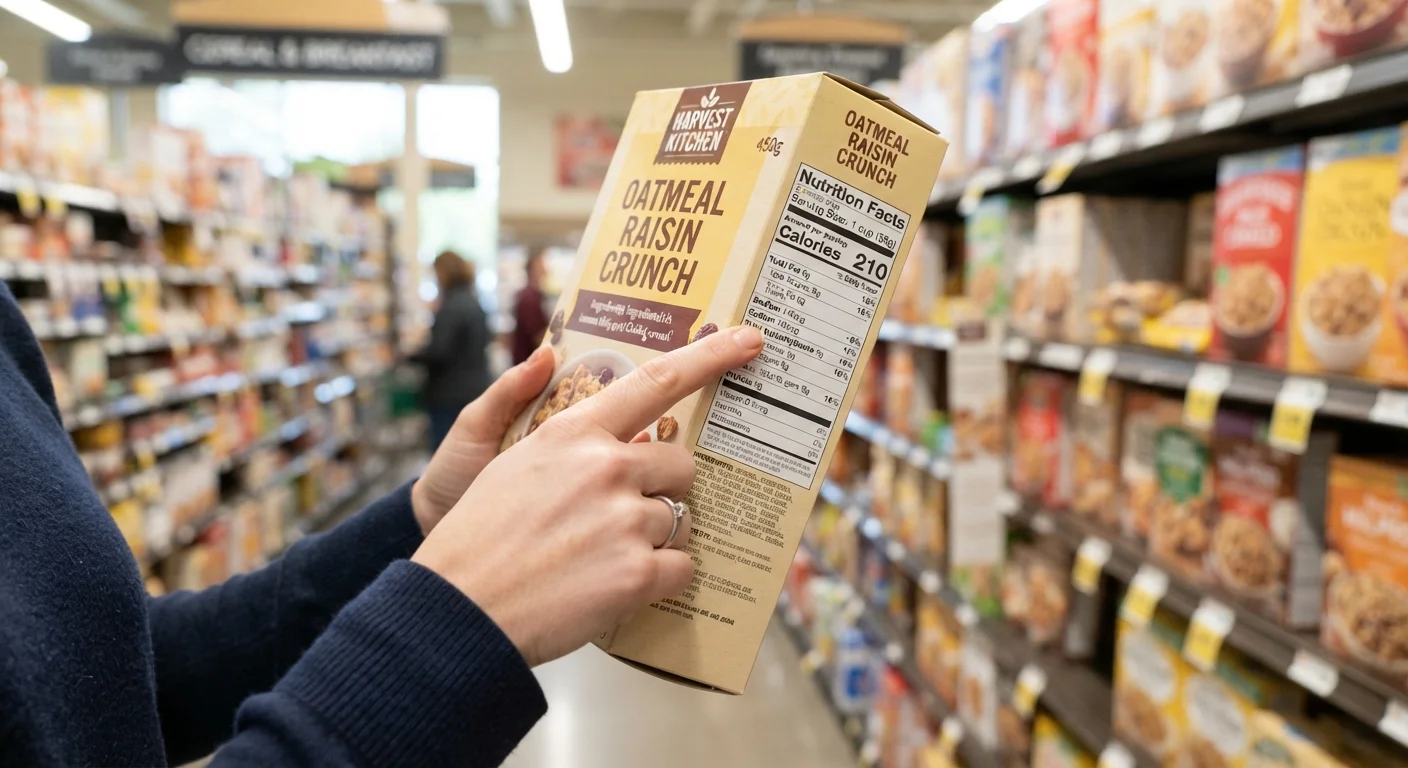
Photo credit: lifestyle-insights.com
In this article
Learn how to interpret serving sizes, daily value percentages, and ingredient lists so your family can make more informed food choices.
Key Takeaways
- Serving size is the foundation of the label: all other numbers apply to that amount, not the whole package.
- The percent daily value column tells you whether a nutrient is high or low relative to a 2,000-calorie daily diet.
- Ingredients are listed by weight, so the first few items make up the largest share of the product.
- Sodium, added sugars, and saturated fat are the three numbers most worth monitoring on packaged foods.
- Generic and store-brand products use the same FDA-required label format, making comparisons straightforward.
Why the label matters before you shop
Most families scan the front of a package for calorie counts or health claims, then drop it in the cart. Front-of-package claims such as "low fat," "natural," or "multigrain" are marketing language, not regulated nutrition information. The nutrition facts panel on the back or side of the package is the part the U.S. Food and Drug Administration (FDA) standardizes and requires manufacturers to complete accurately.
Understanding that panel lets you compare products on a level field, whether you are choosing between a store brand and a name brand or deciding between two cereals. Combined with skills like reading shelf unit prices, label literacy helps families stretch grocery dollars without sacrificing nutritional quality.
What you will need
How to read a nutrition label, step by step
Work through the label in the order below. Each step builds on the one before it, so skipping ahead can lead to misreading a number.
Start with serving size and servings per container
Every number on the label, calories included, refers to one serving, not the entire package. The serving size is printed at the very top of the panel in both a common household measure (such as "1 cup") and a gram weight. The gram weight is more precise and useful when comparing two products.
Check servings per container next. A bag of chips labeled 150 calories may contain three servings, meaning the whole bag is 450 calories. The FDA updated its serving size rules to reflect amounts people actually eat, so many serving sizes are now larger than they were before 2020.
Read the calorie line
Calories appear in large print directly below the serving size. This number tells you how much energy one serving provides. For context, the FDA bases its daily value percentages on a 2,000-calorie daily diet, which is a general reference point, not a prescription for any individual. Children, older adults, and people with specific health conditions have different calorie needs.
Check the nutrients to limit
The FDA requires labels to list saturated fat, trans fat, sodium, and added sugars because most Americans consume too much of these. Look at the gram amounts and at the percent daily value (%DV) column to the right.
The %DV column uses a straightforward scale: 5% DV or less is considered low for a nutrient; 20% DV or more is considered high. A single serving with 30% DV of sodium is high in sodium. A cereal with 4% DV of saturated fat is relatively low.
Look at the nutrients to get enough of
Below the nutrients to limit, the label lists dietary fiber, vitamin D, calcium, iron, and potassium. These are nutrients many Americans do not get enough of. Here, a higher %DV is generally favorable. A food with 15% DV of calcium or 10% DV of dietary fiber contributes meaningfully to those daily goals.
Compare the label across similar products
Once you can read one label fluently, comparison becomes fast. Hold two products side by side and check: Are the serving sizes the same? If not, adjust mentally or use the per-100-gram values. Then scan sodium, added sugars, fiber, and any nutrient relevant to your family's health goals. Store-brand and generic products use the same required format, so the comparison is apples to apples.
This skill connects directly to broader spending habits that affect your grocery budget. A product with a lower unit price and a similar or better nutritional profile is often a straightforward choice.
Understanding the ingredient list
The ingredient list sits below or beside the nutrition facts panel and follows one firm rule: ingredients appear in descending order by weight. Whatever the manufacturer used the most of appears first. If sugar, corn syrup, or another sweetener appears in the first three slots, the product contains a substantial amount of it by weight.
One practical shortcut: count how many ingredients you recognize. A longer list is not automatically worse, but if the first several entries are unfamiliar chemical names rather than whole foods, that is worth noting when comparing alternatives.
Allergens appear in bold within the list or in a separate "Contains" statement immediately after it. This is an FDA requirement, so families managing food allergies can rely on it, though cross-contamination warnings ("may contain") are voluntary and vary by manufacturer.
A quick check for added sugars
"Added sugars" is now a separate line item below total sugars on FDA-compliant labels. It covers sugars added during processing, including honey, cane juice, and syrups, not just table sugar. Foods like plain yogurt contain natural sugars from milk (lactose) that do not appear in the added sugars line, which makes that line a reliable way to identify sweetened versions of otherwise whole foods.
Being a confident label reader fits into a broader approach to grocery spending. See how to set a realistic grocery budget and what drives grocery overspending for practical context.
This article is for general informational purposes only and does not constitute medical or dietary advice. Consult a qualified healthcare professional or registered dietitian for guidance specific to your family's health needs.

Author
Health Editorial Team
Health Editorial Team is the collective byline for our editorial team and contributor network. Articles published under this byline or an editorial pen name are researched, written, and reviewed according to our editorial standards for clarity, consistency, and independence before publication.
View all articles →