
The Family Grocery Budget: A Practical Starting Framework
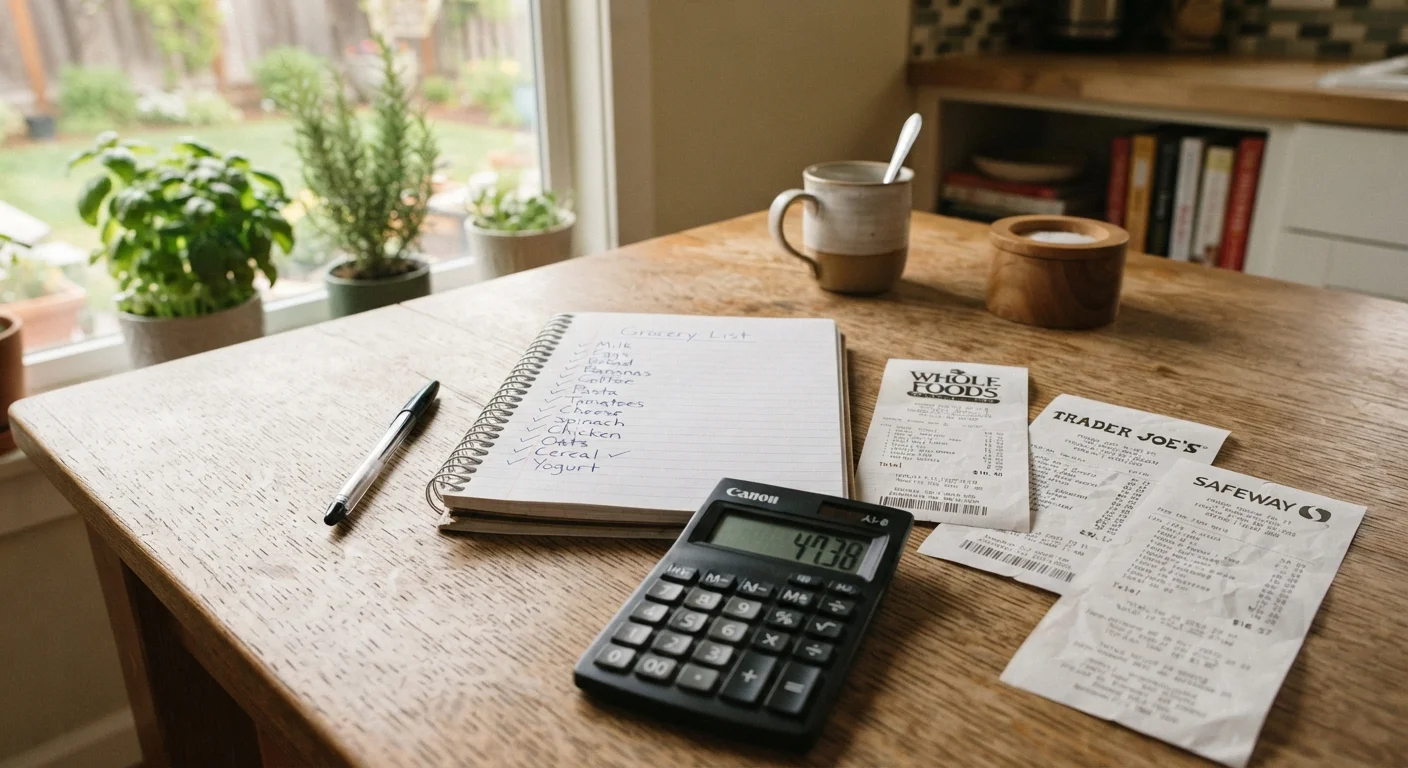
Photo credit: lifestyle-insights.com
In this article
New to budgeting your food spending? This guide explains how to set a realistic grocery budget, track it, and adjust it as your household needs change.
Key Takeaways
- Food spending is one of the few fixed costs families can meaningfully control month to month.
- Starting with your current actual spending is more useful than guessing at an ideal number.
- Tracking requires consistency but does not require complicated tools or apps.
- The budget should be revised whenever household size, income, or food needs shift significantly.
- Meal planning tied to sales can reduce grocery spending without cutting nutrition.
Why a grocery budget is worth building first
Among all household spending categories, food is one of the few where consistent effort produces consistent results. Rent, car payments, and utilities are largely fixed. Groceries are not. The total changes based on what you buy, where you buy it, and how much goes unused.
That variability is the reason a grocery budget is a good place to start when working on a broader household spending plan. See our full household budget framework if you want the wider picture alongside this.
Food spending also connects to other categories. Reducing waste at the grocery store, for instance, ties directly to composting habits at home. Our article on composting kitchen scraps covers how to put unavoidable food scraps to use rather than the trash.
Baseline spending
The average amount your household currently spends in a category, calculated from real past transactions rather than estimates.
Thrifty food plan
The USDA's lowest-cost benchmark for nutritious food spending, used as a reference point for what a household might spend at minimum given their size and age composition.
Unit price
The cost per standard measure (such as per ounce or per count) shown on grocery shelf tags, used to compare value across different package sizes.
Food waste
Food purchased but not eaten, which reduces the practical value of every grocery dollar spent and raises the effective cost of meals.
Budget drift
The gradual increase in spending beyond a set target, usually caused by small, untracked purchases accumulating over time.
How to set a realistic starting number
The most common mistake when setting a grocery budget is picking a number that feels responsible rather than one grounded in reality. A target that is too low fails within two weeks, which makes the whole system feel broken when the real problem was just the number.
A better approach: pull three months of bank or credit card statements and total what your household actually spent at grocery stores. Average those three months. That average is your baseline, not your goal. Your goal comes after you understand where the money is going.
The USDA publishes food cost reports with monthly spending estimates across household sizes and age groups. These give you a useful comparison point. If your baseline is already near the thrifty-plan figure, aggressive cuts carry more trade-offs than they might for a household spending at the liberal-plan level.
Once you have your baseline, set an initial target 5 to 10 percent below it. That gap is achievable without requiring a complete overhaul of how your family eats. Understanding unit pricing on shelf tags is one of the fastest ways to find savings without changing what you buy.
Tracking what you actually spend
Tracking works when it is frictionless enough to maintain. The method matters less than the consistency. A paper notebook, a notes app, a shared spreadsheet, or a dedicated envelope for receipts all work. What does not work is an elaborate system that gets abandoned after two weeks.
At minimum, record the store, the date, and the total for each trip. After a month, look for patterns: which store trips tend to run over, which days of the week produce the largest totals, and whether unplanned stops account for a meaningful share of spending.
It is worth deciding upfront what counts as a grocery purchase for your household. Gas station snacks, convenience store runs, and drugstore food purchases are easy to omit, but they add up. Consistency in what you count matters more than the specific definition you choose.
Families who track spending often discover that small recurring purchases are responsible for more budget drift than the big weekly shop.
Make your first month about observation
Do not try to cut spending and track it at the same time in your first month. Use the first four weeks purely to collect data: every receipt, every store, every total. Changes based on real information are more effective and more durable than changes made before you know what the problem actually is.
Adjusting the budget as your household changes
A grocery budget built for a household of three does not automatically work for a household of four. Neither does a budget built in one season hold exactly in the next, particularly for households that shift toward fresh produce in warmer months.
Review your target number whenever a meaningful change happens: a new child, a teenager who suddenly eats more, a change in income, or a shift in dietary needs. Medical or nutritional changes to a family member's diet sometimes require spending more in one area to spend less in another, and the budget should reflect that reality rather than fight it.
Reading nutrition labels accurately can help families make better purchasing decisions when navigating dietary changes without automatically increasing costs.
Outside of major changes, a quarterly check on whether your target still matches your actual needs is usually enough. If you are consistently coming in under budget, the target may be set too high. If you are consistently over, either the target needs to move or spending habits do.
Common mistakes that stall progress
Setting a number and never looking at it again is the most common failure mode. A budget functions as an ongoing reference, not a one-time calculation. Without regular check-ins, it becomes meaningless within a few months.
Treating the grocery budget as separate from meal planning is another gap that costs money. Shopping without a list tied to planned meals produces more impulse purchases and more food waste. Our sale-first meal planning guide shows how to connect the two habits so each reinforces the other.
Some families also undercount their food spending by excluding restaurant meals, takeout, or food delivery from the grocery total. Those are legitimate categories to track separately, but they belong somewhere in the household budget. Excluding them entirely tends to make the grocery budget look healthier than the overall food situation is.
For a wider view of where household budgets tend to lose ground quietly, see our piece on reducing recurring monthly costs.
This article is for general informational purposes only and does not constitute financial or dietary advice. Consult a qualified financial professional for guidance specific to your household's circumstances.
Frequently Asked Questions

Author
Shopping Editorial Team
Shopping Editorial Team is the collective byline for our editorial team and contributor network. Articles published under this byline or an editorial pen name are researched, written, and reviewed according to our editorial standards for clarity, consistency, and independence before publication.
View all articles →