
Building a Weekly Meal Plan Around Store Sales
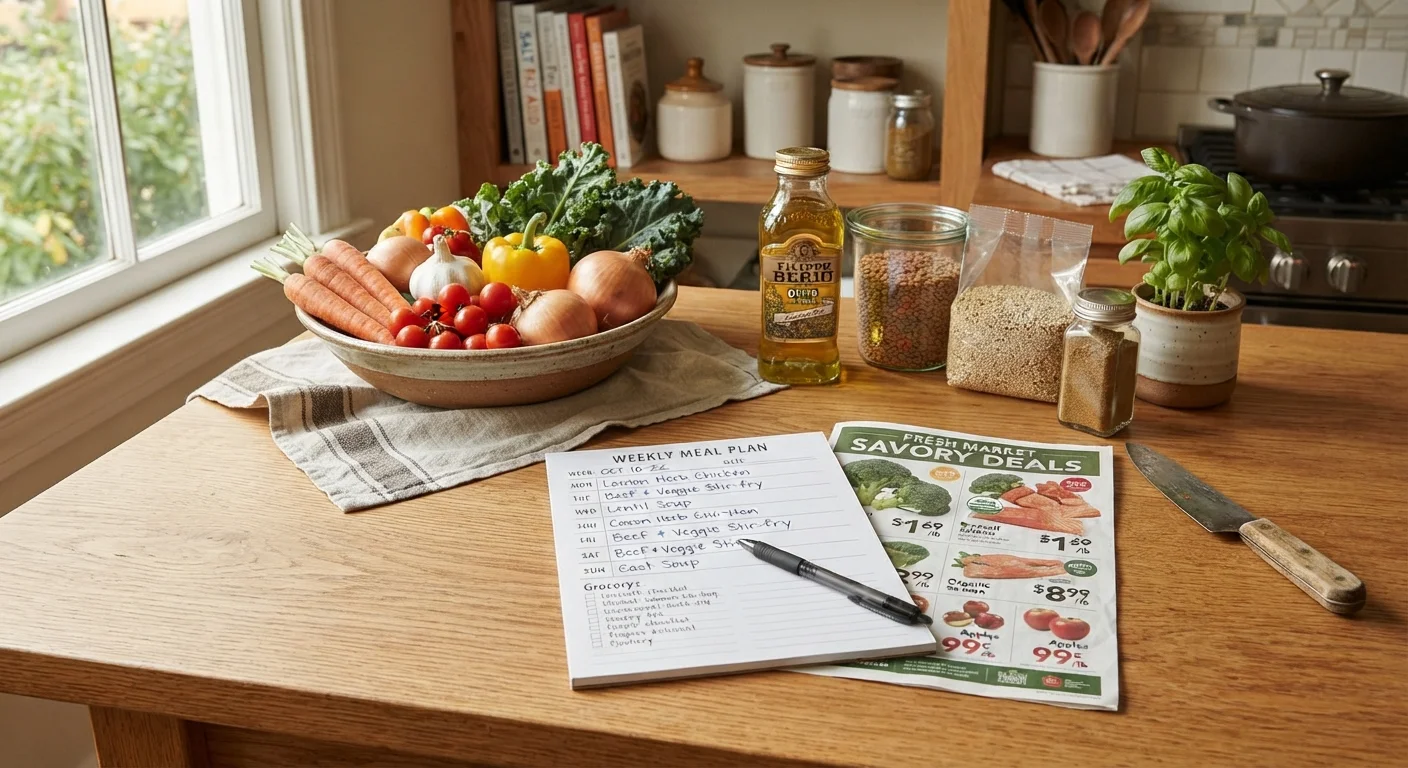
Photo credit: lifestyle-insights.com
In this article
Matching your weekly menu to what is already on sale can meaningfully reduce grocery spending. A practical walkthrough for families new to sale-first planning.
Key Takeaways
- Collect store circulars before you plan your menu, not after.
- Protein and produce on sale should anchor each week's meals.
- A flexible pantry of staples lets you build around almost any sale item.
- Doubling a recipe when an ingredient is on sale stretches savings further.
- Tracking what your family actually ate helps you refine the process over time.
Why planning around sales works
Most families shop the other way: they decide what they want to eat, write a list, and then hope the store has it at a reasonable price. Reversing that order means the store's discounts do the planning work for you. When chicken thighs are marked down, this week becomes a chicken week. When bell peppers are cheap, they show up in three different dinners. The grocery bill shrinks because you are buying what the store already wants to move, not fighting the pricing structure.
This method takes some adjustment. Families used to a fixed rotation of meals may find it uncomfortable at first to let the circular drive the menu. The practical workaround is keeping a short list of flexible recipes that work with a range of proteins or vegetables. Those recipes become your framework, and the sales fill in the variables.
If you are still setting up your overall food budget, the family grocery budget framework gives a useful starting point before you try to optimize where the money goes.
What you need before you start
What you will need
The tools below make the process faster, but the approach itself requires no special equipment.
Store weekly circulars
Show which items are discounted this week so you can build meals around them.
Meal planning notepad or app
Gives you a place to write out the week's dinners and associated shopping list in one view.
Pantry inventory list
Tracks what staples you already have so you avoid buying duplicates and can spot gaps.
Calculator or phone
Lets you quickly calculate unit prices when comparing sale items to store brands.
How to build the plan
Follow these steps each week, ideally one or two days before you shop. The whole process takes under an hour once you have done it a few times.
Collect this week's circulars before opening any recipe
Pull up the weekly ad for every store you regularly use. Most chains post them online Thursday or Friday. Scan the front page and the meat, produce, and dairy sections first, since those categories have the widest price swings week to week. Write down or screenshot the items with the steepest discounts.
Identify your anchor proteins and produce
From your circular notes, pick one or two proteins and two or three produce items that are genuinely cheaper than their normal price. These become the foundation of your weekly menu. A family of four generally needs enough protein for five to six dinners, so one or two discounted proteins are usually enough to anchor the whole week.
Match flexible recipes to your anchors
Go to your list of household-approved flexible recipes and find which ones use the proteins and produce you identified. Aim for five to six dinner recipes that share ingredients so you are not buying a specialty item for a single dish. Soups, stir-fries, sheet pan meals, and grain bowls adapt easily to whatever is cheap that week.
Build the shopping list from the plan, not your memory
Write each dinner on a day of the week, then list every ingredient needed. Cross off anything already in your pantry. What remains is your shopping list. Organize it by store section (produce, meat, dairy, dry goods) to avoid backtracking in the store, which tends to lead to impulse additions. For guidance on reading labels once you are in the store, understanding nutrition labels can help you compare products on value and content at the same time.
Note what worked and what did not after the week ends
Spend five minutes at the end of the week writing down which meals were eaten as planned, which were skipped, and whether any food was thrown away. This simple record tells you which recipes are genuinely repeatable and which proteins or vegetables your family will not finish before they spoil, so next week's plan is more accurate.
One habit that accelerates savings is watching for items that store well when they go on deep discount. Bulk buying can extend those savings further, but only when your household will use the quantity before it spoils and you have the storage space to hold it.
Common mistakes that undercut the savings
Sale-first planning can backfire in a few predictable ways. Buying a sale item your family dislikes just because it is cheap wastes the discount entirely. Overbuying perishables to hit a sale price and then throwing half of them away has the same effect. The habits that quietly undermine a grocery budget often show up even when families think they are being careful.
A second common problem is ignoring unit prices. A sale banner does not always mean the item is cheaper per ounce than the store brand or a competing product without a sale tag. Check the shelf tag's unit price line rather than the headline discount.
Finally, do not let the meal plan become rigid. If something is not eaten one night, move it. Wasted food is wasted money regardless of how good the original deal was. Running a quick check before adding items to the cart can catch impulse additions that dilute the savings from your planned purchases.
Sale-first planning is one piece of a broader approach to household spending. Other recurring cost reductions in categories outside groceries can compound the effect over a month.

Author
Shopping Editorial Team
Shopping Editorial Team is the collective byline for our editorial team and contributor network. Articles published under this byline or an editorial pen name are researched, written, and reviewed according to our editorial standards for clarity, consistency, and independence before publication.
View all articles →