
Annuals vs. Perennials: Which Plants Stretch Your Garden Budget Further
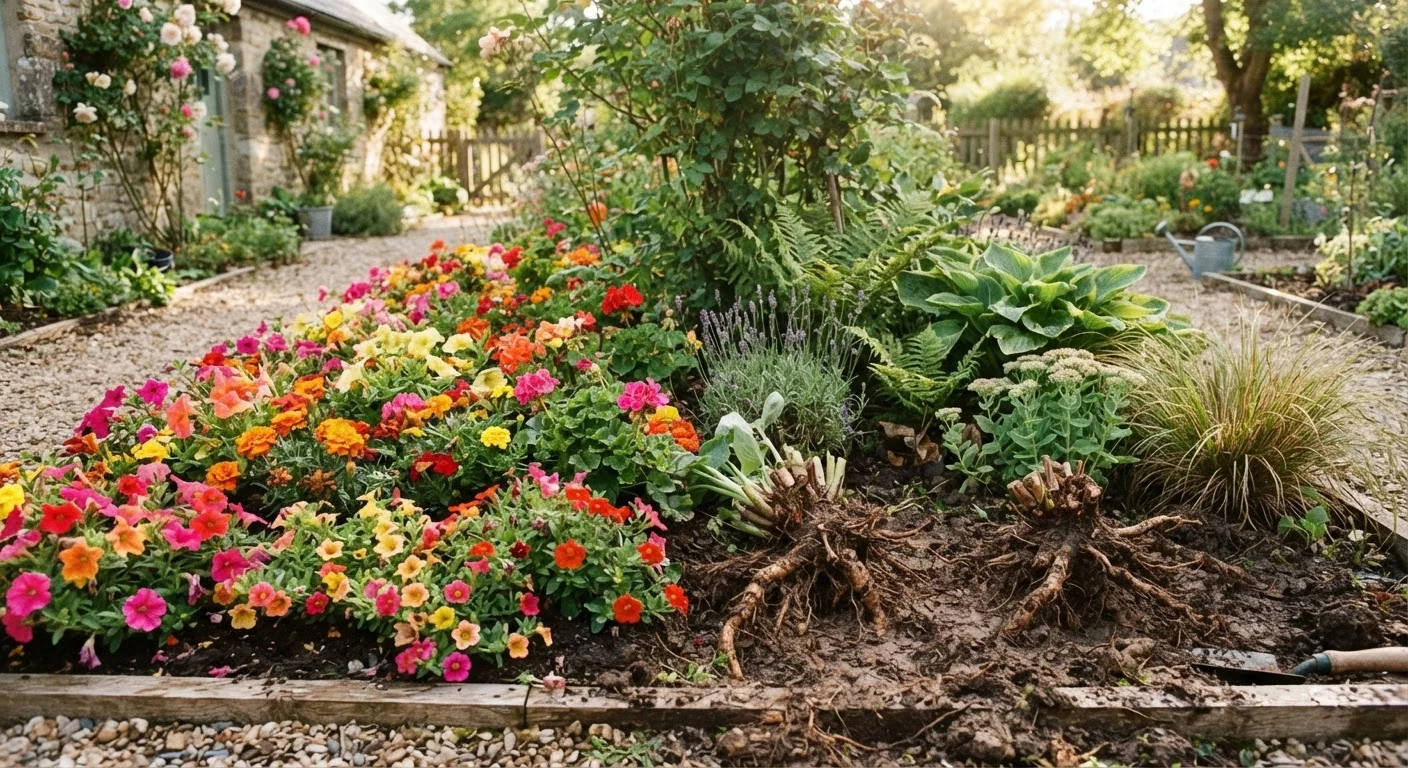
Photo credit: lifestyle-insights.com
In this article
Choosing between annuals and perennials affects how much you spend season to season. Here is how each type performs for cost-conscious home gardeners.
Key Takeaways
- Annuals cost less per plant upfront but must be repurchased every season.
- Perennials carry a higher initial price but return on their own for three or more years.
- Dividing mature perennials lets you expand planting areas without additional spending.
- A mixed garden strategy often gives the best balance of color and long-term savings.
- Seed-starting annuals at home can cut their seasonal cost significantly.
How each plant type handles your money differently
The core financial difference between annuals and perennials is timing. Annuals complete their full life cycle in one growing season: you plant, they bloom, they die. Every spring you start over. Perennials die back in winter but regrow from the same root system for several years, sometimes decades.
That difference shapes every budget decision in your garden. With annuals, spending is predictable and recurring. You buy plants or seeds each season, which makes it easier to control how much you spend in any given year. With perennials, you pay more per plant at the outset, but that cost does not repeat. Think of it the way you might think about fixed versus variable household expenses: annuals behave like a recurring variable cost, while perennials behave more like a one-time fixed purchase that spreads its value over time.
Neither type is inherently cheaper. The question is whether your budget is better suited to lower recurring costs or a larger upfront investment.
| Criterion | Annual plants | Perennial plants |
|---|---|---|
| Upfront cost per plant | Lower ($1-$4 from seed, $2-$6 transplant) | Higher ($8-$25 or more) |
| Recurring seasonal cost | Every year | Minimal after year one |
| Design flexibility | Change layout each season | Fixed once established |
| Time to full bloom | Same season | One to two seasons |
| Expansion without extra cost | Not possible | Yes, through division |
| Seasonal labor | Higher (replant each year) | Lower once established |
| Best budget window | Short term (one to two seasons) | Long term (three-plus years) |
The real cost of annuals over multiple seasons
A flat of annual flowers (typically six to eight plants) averages between $5 and $15 at garden centers, depending on variety and region. For a modest 100-square-foot bed, you might spend $40 to $80 per season on plants alone, not counting soil amendments or mulch. Over five years, that adds up to $200 to $400 for the same bed.
Seed-starting is the most effective way to reduce that recurring cost. Many popular annuals, including zinnias, marigolds, and sunflowers, germinate reliably from inexpensive seed packets. A packet that costs $2 to $4 can fill a large bed, bringing the per-season cost well below what transplants cost. The trade-off is time: seedlings need four to eight weeks indoors before transplanting, depending on your climate.
Annuals also give you complete design flexibility. If a color scheme did not work last year, you simply plant something different next spring. For families who enjoy changing their outdoor space, that flexibility has real value beyond the dollar amount.
How perennials pay off over time
Individual perennial plants typically cost $8 to $25 or more at garden centers, and some specialty varieties run higher. That is a meaningful difference compared with annuals at planting time. However, a healthy perennial clump can be divided every three to five years, giving you two or more plants where one grew before. That division process lets you expand your beds or share plants with neighbors without spending anything additional.
A bed planted with 20 perennials in year one could, through division, fill a much larger space by year four or five with no added plant cost. Over a ten-year window, the per-season cost of a perennial bed often drops well below what the same space would cost in annuals each year.
Perennials also tend to need less labor once established. You skip the annual tasks of pulling spent plants, amending soil heavily each spring, and replanting. That saved time has real value for busy families. If you are already working to reduce recurring household costs, cutting down on seasonal garden spending through perennials fits that same pattern.
One honest caveat: perennials take one to two seasons to reach full size. The first year, many barely flower. Patience is part of the investment.
Mixing both types for the best practical outcome
Most experienced home gardeners use both. A backbone of perennials gives the bed structure and long-term value, while a smaller number of annuals fill gaps and provide consistent color while perennials are still establishing. As the perennials mature and fill in, the annual budget naturally shrinks because there is less open space to cover.
This approach also lets you test what works in your specific yard before committing to expensive perennial plantings across a large area. Starting with annuals in a new bed, then introducing perennials once you understand the sun, drainage, and soil conditions, reduces the risk of losing costly plants to conditions that were not obvious at first.
For families thinking about low-cost curb appeal improvements, a mix of fast-blooming annuals near the front walkway and slower-growing perennials in border beds is a practical starting point. The same logic applies if you are working with a raised bed setup, where annuals can keep the bed productive while you decide on a longer-term perennial plan.
Buying perennials in late summer or fall, when garden centers discount remaining stock, is one of the most reliable ways to lower the upfront cost. Those plants establish their roots over winter and perform well the following spring.

Author
Home & Garden Editorial Team
Home & Garden Editorial Team is the collective byline for our editorial team and contributor network. Articles published under this byline or an editorial pen name are researched, written, and reviewed according to our editorial standards for clarity, consistency, and independence before publication.
View all articles →