
Keeping a Maintenance Log and Why It Pays Off at Trade-In Time
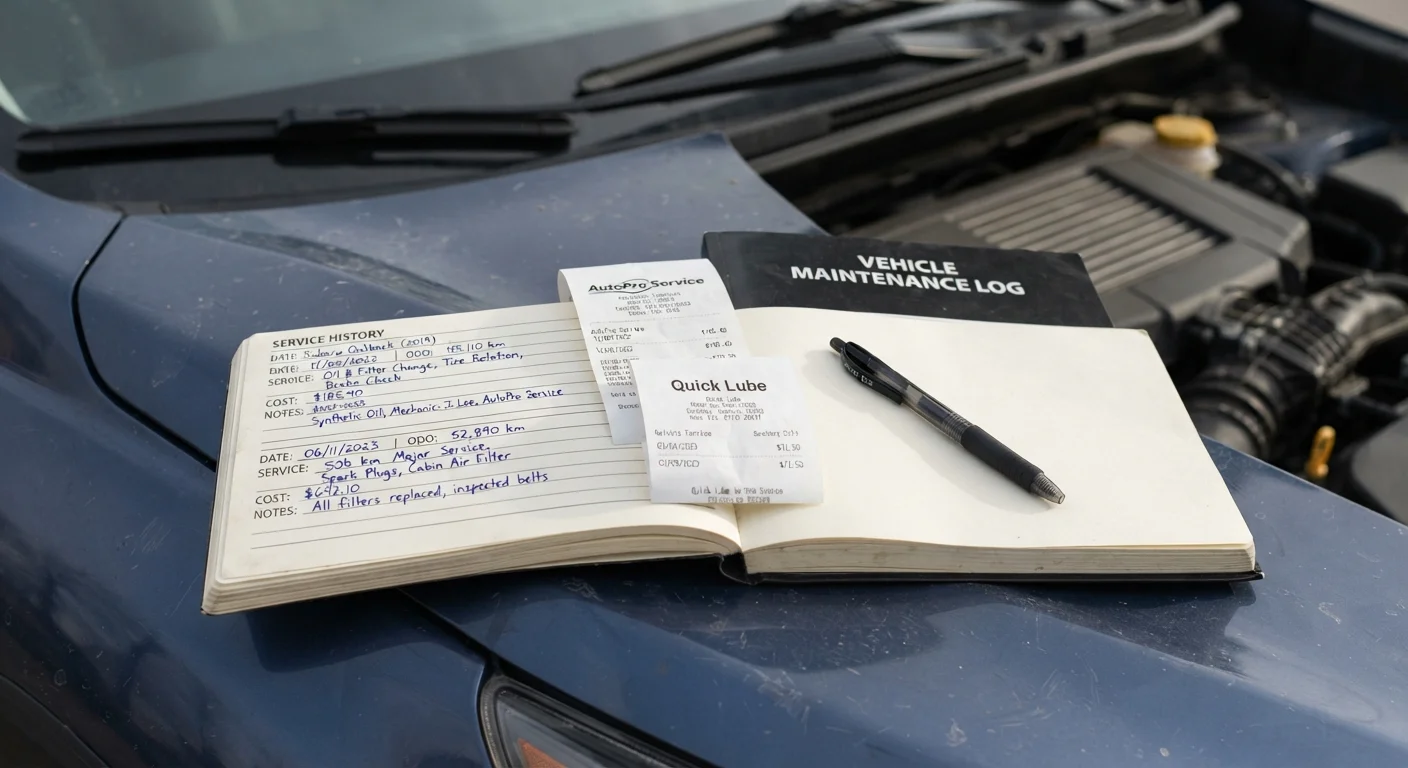
Photo credit: lifestyle-insights.com
In this article
A simple record of services, repairs, and inspections can increase resale value and help you catch recurring problems early. Here is how to build one.
Key Takeaways
- A written service history gives dealers and private buyers objective evidence of how well a vehicle was maintained.
- Logs help you spot patterns such as recurring fluid loss or frequent battery replacements before they become costly failures.
- Digital and paper formats both work; consistency matters more than format.
- Receipts attached to entries carry more weight than handwritten notes alone.
- Starting a log on a vehicle you already own is worthwhile at any mileage.
Why a maintenance log has real dollar value
When a dealer appraises a trade-in or a private buyer inspects a used vehicle, they are pricing in risk. A car with no service records is assumed to have been neglected, even if it hasn't been. A car with a complete, dated log shifts that assumption. The buyer can see that oil was changed on schedule, that the transmission fluid was swapped at the correct interval, and that the brakes were inspected regularly.
That shift in perception has financial weight. Appraisers and private buyers routinely discount vehicles with no history, because they have no way to estimate what deferred maintenance may have occurred. A documented record removes that discount, at least in part. It won't guarantee a higher offer, but it reduces the argument a buyer has for lowballing.
There is a second benefit that shows up before you ever sell. A log forces you to review your vehicle's service pattern, which makes it easier to notice when something is happening more often than it should. Repeated coolant top-offs, for example, suggest a slow leak that a single shop visit might not flag. This is especially relevant if you're working to extend the life of a high-mileage vehicle.
Maintenance costs are part of the total picture of ownership. If you haven't mapped out the full cost of running your vehicle, the full ownership cost breakdown is a useful starting point alongside this log.
What to record in every entry
Each log entry needs enough detail to be useful months or years later. The minimum information for any service event is the date, the current odometer reading, a plain description of what was done, who did the work (shop name or "self"), and the amount paid. That combination gives any future reader the full context they need.
For repairs beyond routine maintenance, add the part number or part description, the reason the repair was needed, and whether any related items were inspected at the same time. If a mechanic flagged something but you chose to wait on it, note that too. A record that says "rear brake pads at 40% wear, monitor" is more useful than silence, because it tells the next owner or appraiser that you knew about it and made a deliberate choice.
Attach or scan receipts whenever possible. A handwritten entry says what happened; a receipt proves it. Digital photos of receipts stored in a folder alongside a spreadsheet log are adequate and harder to lose than paper tucked into a glove box.
Seasonal checks count as log entries
You don't need a shop receipt to make a valid log entry. Recording a personal inspection of tire pressure, fluid levels, or wiper condition with the date and mileage adds to the documented history of attentive ownership. These entries are simple to add and take less than two minutes.
For seasonal checks, a log entry doesn't require a shop visit. You can record that you personally checked tire pressure, inspected wiper blades, and topped off washer fluid on a given date. These entries add to the picture of attentive ownership. For a full seasonal checklist, see our guide on what to inspect before each driving season.
Troubleshooting gaps and inherited vehicles
If you bought a vehicle without any service history, start the log the day you take ownership. Note the odometer reading, any known issues, and the date. From that point forward, every service you record builds a partial history that is still more useful than nothing. Dealers know that many used vehicles arrive without documentation; even a log covering the last two or three years of ownership shows recent care.
If you have some records but they are scattered across receipts, phone photos, and memory, spend an hour assembling what you have in chronological order before starting fresh entries. Rough entries like "oil change, approximate date based on receipt, 67,400 miles" are acceptable. Accuracy on recent entries matters more than filling every gap in older ones.
For anyone doing some work themselves, log those entries the same way you would a shop visit. A note that says "replaced air filter, OEM-spec part, 72,100 miles, $18" is a legitimate record. The DIY maintenance guide covers which tasks are reasonable to handle at home, which informs what you might be recording yourself versus what a shop will document for you.

Author
Automotive Editorial Team
Automotive Editorial Team is the collective byline for our editorial team and contributor network. Articles published under this byline or an editorial pen name are researched, written, and reviewed according to our editorial standards for clarity, consistency, and independence before publication.
View all articles →