
What Homeowners Need to Understand About Insulation and Energy Bills
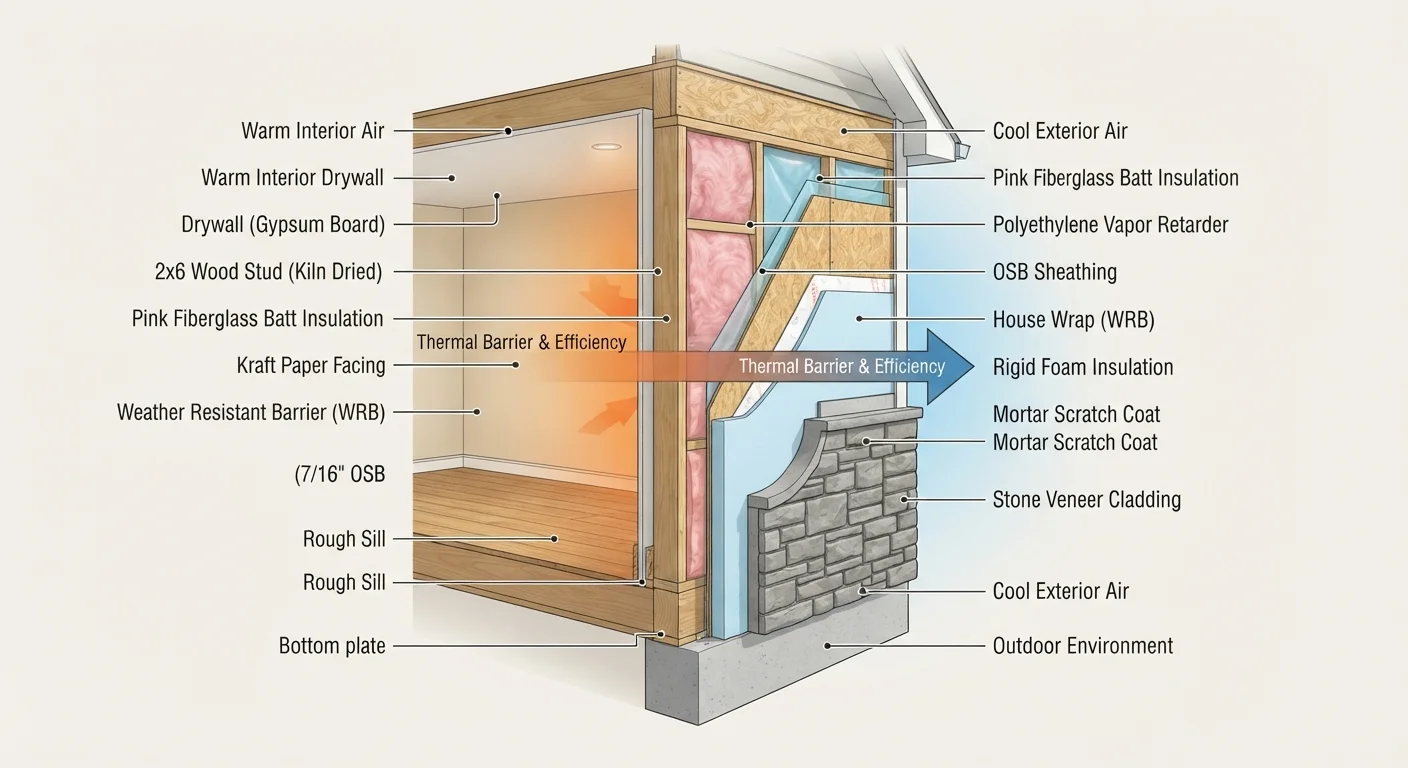
Photo credit: lifestyle-insights.com
In this article
Insulation directly affects how much you spend heating and cooling your home. This explainer covers how different insulation types work and where they matter most.
Key Takeaways
- Attic insulation typically delivers the largest energy savings per dollar spent in most homes.
- R-value measures how well insulation resists heat flow; higher is better for most climates.
- Air sealing and insulation work together; insulation alone cannot stop drafts.
- Many utility companies offer rebates or free energy audits that help identify insulation gaps.
- DIY insulation upgrades in attics are feasible for many homeowners, but walls and crawl spaces often need a professional.
Why insulation directly affects what you pay each month
Heating and cooling account for roughly half of a typical household's energy use, according to the U.S. Department of Energy. That makes the thermal envelope of your home, meaning the walls, attic, floors, and foundation that separate conditioned space from the outdoors, one of the biggest levers you have over a recurring cost.
Insulation does not create heat or cool air. It slows the rate at which temperature moves through building materials. A poorly insulated attic in July acts like a radiator pointed at your living room ceiling. The same attic in January bleeds warmth outside faster than your furnace can replace it. Either way, your utility bill rises.
Energy costs are a variable household expense: they shift with the seasons, with fuel prices, and with how hard your equipment has to work. Understanding which household costs are variable can help you see where insulation improvements have real budget impact.
Check your attic before spending anything
Measure the depth of existing attic insulation and note the material type. Compare that to the Department of Energy's zone-specific R-value recommendations for your area. This one step tells you whether an upgrade is likely to pay off, and by how much, without spending a dollar.
How R-value works and why location matters
Every insulation product carries an R-value per inch. Fiberglass batts run around R-3 to R-4 per inch. Spray polyurethane foam can reach R-6 or higher per inch. Loose-fill cellulose sits around R-3.5 per inch. The type you choose matters less than whether the installed R-value meets the recommended level for your climate zone and the specific building assembly you are insulating.
The Department of Energy divides the country into eight climate zones. A home in Minnesota needs a much higher attic R-value than a home in central Florida. Installing R-19 where R-49 is recommended leaves significant savings on the table, even if the insulation itself is high quality.
Location within the house also changes the math. Attic insulation is usually the single highest-impact upgrade because heat rises and attic bypasses are common. Walls matter too, but accessing wall cavities in an existing home is more disruptive and expensive. Basement rim joists, the perimeter framing just above the foundation, are frequently overlooked and relatively easy to insulate.
~50%
Share of home energy used for heating and cooling
According to the U.S. Department of Energy, heating and cooling account for roughly half of a typical household's total energy consumption.
Up to 15%
Potential reduction in heating and cooling costs
The U.S. Department of Energy estimates this range for homes that add proper insulation and air sealing where deficiencies exist.
90%
U.S. homes estimated to be under-insulated
The North American Insulation Manufacturers Association has cited this figure to describe the gap between current installed levels and recommended levels in existing housing stock.
Common insulation types and where each is used
Fiberglass batts come pre-cut to fit standard stud spacing. They work well in open attic floors and unfinished walls when installed without gaps or compression. Any gap, even a small one, can significantly reduce effective performance because heat finds the path of least resistance.
Blown-in cellulose or fiberglass is common for attic floors and hard-to-reach spaces. It can be added on top of existing insulation to bring an older attic up to current recommendations. Rental equipment makes this accessible for handy homeowners, though proper protective gear is needed.
Spray foam comes in two forms. Open-cell foam is softer and less expensive; closed-cell foam is denser, has a higher R-value per inch, and doubles as a vapor retarder. Spray foam is typically applied by professionals and is well-suited to rim joists, irregular spaces, and locations where both insulation and air sealing are needed at once.
Rigid foam boards are used on exterior walls, basement walls, and under concrete slabs. They do not absorb moisture and resist compression, making them practical in below-grade applications.
Air sealing: the part most homeowners skip
Insulation and air sealing are separate tasks that support each other. Air moves through gaps, cracks, and penetrations by pressure difference, not by conduction. Fluffy insulation material does not stop moving air; it only slows conducted heat transfer.
Common air leakage points include the gaps around recessed light fixtures in the ceiling below an attic, plumbing and wiring penetrations through the top plate, the junction between the attic floor and any knee walls, and the band joist along the foundation perimeter. Sealing these with caulk, weatherstripping, or spray foam before adding insulation gives both improvements better combined results.
A home energy audit, which many utility companies offer at low or no cost, uses a blower door test to identify where air is leaking most. That data tells you where to focus before spending money on materials.
When to call a professional
Any work near knob-and-tube wiring, vermiculite insulation (possible asbestos content), or gas-fired equipment should be evaluated by a licensed contractor before you start. Disturbing certain older materials without proper precautions creates safety and health hazards. Your local building department can tell you whether a permit is required for the work you are planning.
Finding the most cost-effective place to start
If your home has less than R-30 in the attic, adding insulation there is almost always worth the cost and effort. Most older homes were built to much lower standards than current recommendations. An attic that has R-11 from the 1970s can often be brought to R-49 with blown-in insulation in a weekend, with materials available at most home improvement stores.
Check your crawl space or basement next. Insulating the floor over an unheated crawl space, or the walls of a conditioned basement, addresses the source of cold floors in winter and can reduce moisture-related issues at the same time.
Walls are typically addressed last, or during a larger renovation when the sheathing is already exposed. Blown-in wall insulation through small drilled holes is an option, but the labor cost is higher and the disruption greater than attic or basement work.
Before any project, review whether your utility company offers rebates for insulation upgrades. Many do, and some state programs also provide assistance for qualifying households. The federal government has offered residential energy efficiency tax credits as well; check current IRS guidance for what applies in your situation.
Frequently Asked Questions

Author
Home & Garden Editorial Team
Home & Garden Editorial Team is the collective byline for our editorial team and contributor network. Articles published under this byline or an editorial pen name are researched, written, and reviewed according to our editorial standards for clarity, consistency, and independence before publication.
View all articles →