
Paying Off Debt Faster: Comparing the Avalanche and Snowball Approaches
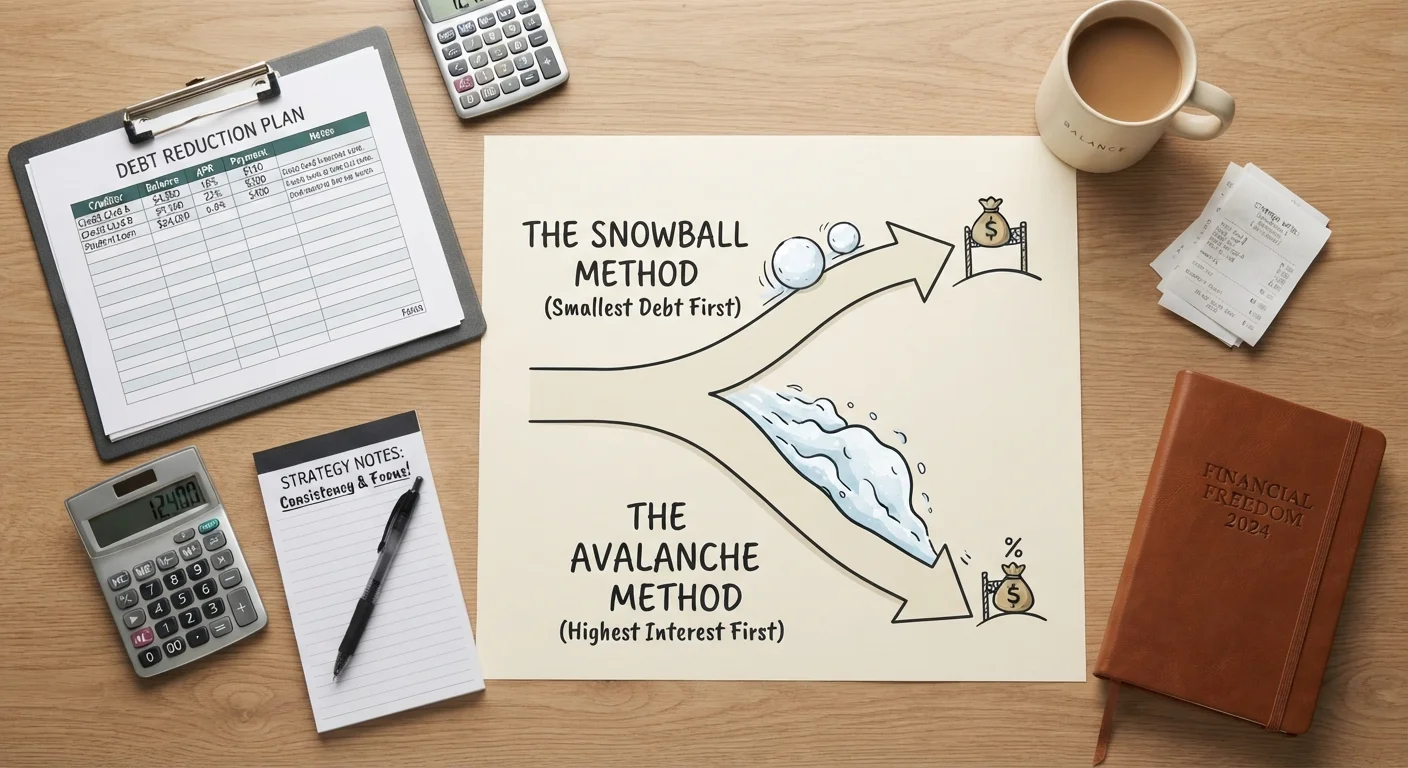
Photo credit: lifestyle-insights.com
In this article
The avalanche and snowball methods both help reduce debt, but they work differently. See how each approach is structured and what it prioritises.
Key Takeaways
- The avalanche method targets highest-interest debt first, reducing total interest paid over time.
- The snowball method pays off smallest balances first, building momentum through quick wins.
- Neither method requires extra income; both work by redirecting existing payments strategically.
- Behavioral consistency matters as much as math when choosing a debt payoff strategy.
- Consulting a licensed financial professional is advisable before restructuring debt payments.
How each method is structured
Both approaches assume you make minimum payments on every debt each month and direct any extra money toward one target account at a time. The difference is how that target is chosen.
With the avalanche method, you sort debts by interest rate and attack the highest rate first. Once that balance reaches zero, the payment you freed up rolls into the next highest-rate account. This sequence continues until all debts are cleared. Because high-rate debt grows fastest, eliminating it early reduces the total interest that accumulates across the entire repayment period.
With the snowball method, you sort by balance size instead of interest rate, starting with the smallest balance. Once the smallest account is paid off, its former payment amount shifts to the next smallest, and so on. The balance sizes grow like a snowball gathering mass, giving the method its name.
| Avalanche method | Snowball method | |
|---|---|---|
| Payoff order | Highest interest rate first | Smallest balance first |
| Total interest paid | Lower over full repayment | Higher if rates vary widely |
| Time to first account closure | Slower if top-rate debt is large | Faster for small balances |
| Motivational structure | Relies on long-term discipline | Early wins reinforce progress |
| Complexity | Sort by APR, reorder as needed | Sort by balance, straightforward |
| Best debt profile fit | Few large high-rate balances | Many small balances across accounts |
Neither method requires you to earn more. Both work by concentrating payment power rather than spreading it thin across all accounts simultaneously. If you are also working to lower monthly spending, see practical ways families cut recurring costs for approaches that free up extra cash without major lifestyle changes.
The math behind the avalanche approach
Interest charges are the cost of carrying debt. A balance at 24% APR (annual percentage rate) grows much faster than one at 8% APR. Paying off the 24% balance first means fewer months of high-rate charges, which shrinks the total amount repaid across all debts combined.
The trade-off is that the highest-rate debt is not always the smallest balance. If your highest-rate card also carries your largest balance, months may pass before you eliminate a single account. That slow visible progress is where the avalanche method loses people behaviorally, even when it wins mathematically.
This article provides general financial information only and is not personalized financial advice. Speak with a licensed financial professional about your specific situation before restructuring any debt payments.
The psychology behind the snowball approach
Paying off a full account delivers a concrete signal that the plan is working. Research in behavioral economics has documented that people respond to these intermediate milestones, and the snowball method is built around that pattern. Each closed account removes a monthly obligation from the list and moves the remaining payment capacity to the next target.
For households juggling five or more separate balances, clearing accounts one by one also simplifies administration. Fewer login credentials, fewer due dates, and fewer minimum payments to track each month reduces the chance of a missed payment, which can trigger penalty rates that undermine any payoff strategy.
The cost of this approach is real. Leaving a high-interest balance untouched while paying down a lower-rate account means more interest accumulates overall. Whether that extra cost is worth the motivational and organizational benefit depends on the household's debt profile and its track record with long financial commitments.
Choosing between the two
Start by listing every debt with its current balance and interest rate. If the highest-rate debt is also a medium or large balance, the avalanche path will require patience before the first account closes. If most of the small balances carry low interest rates, the snowball's motivational advantage comes at minimal extra cost.
Some households run a hybrid: they use the snowball to eliminate one or two very small balances quickly, then switch to avalanche ordering for the rest. This is not a formal method, but it is a reasonable compromise when a couple of tiny balances would be paid off within a few months anyway.
Whichever structure you choose, the mechanics only work if the freed-up payment amount actually moves to the next target rather than re-entering general spending. Building that redirection into a written or digital budget is the practical step most often skipped. Savings tools like cashback apps and loyalty programs can generate small amounts of additional cash that, when added consistently to debt payments, shorten timelines meaningfully over a year or more.

Author
Finance Editorial Team
Finance Editorial Team is the collective byline for our editorial team and contributor network. Articles published under this byline or an editorial pen name are researched, written, and reviewed according to our editorial standards for clarity, consistency, and independence before publication.
View all articles →