
Understanding Auto Insurance Coverage Types Without the Jargon
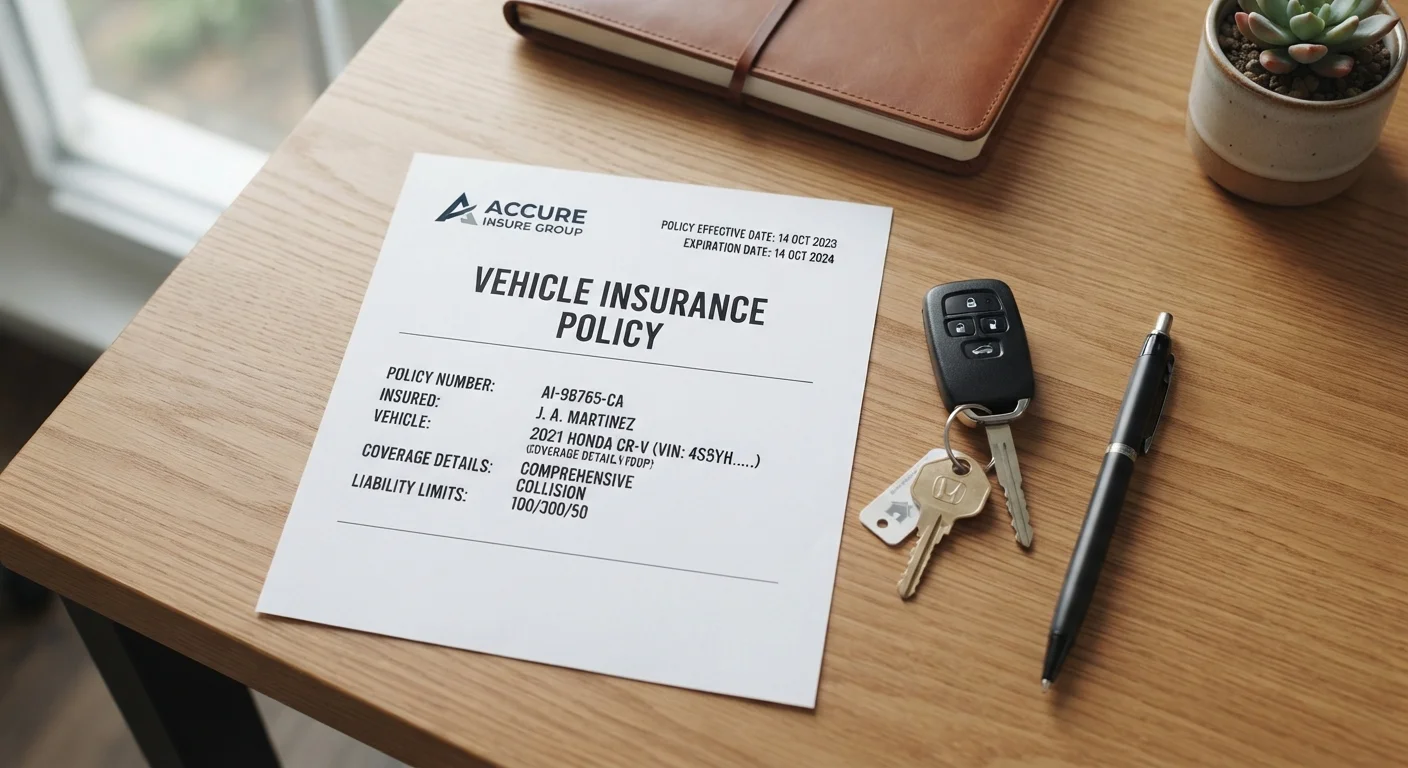
Photo credit: lifestyle-insights.com
In this article
Liability, collision, comprehensive, and uninsured motorist coverage all serve different purposes. This guide explains each in straightforward terms.
Key Takeaways
- Liability coverage pays for damage you cause to others; it does not cover your own vehicle.
- Collision coverage applies when your car is damaged in a crash, regardless of who was at fault.
- Comprehensive coverage handles non-collision events such as theft, weather damage, and animal strikes.
- Uninsured motorist coverage protects you when the at-fault driver has no or insufficient insurance.
- Raising your deductible lowers your premium, but it increases your out-of-pocket cost after a claim.
- Insurance costs are one of the ownership expenses many families underestimate when buying a vehicle.
Why auto insurance feels confusing
Auto insurance policies are written in legal and industry language that was not designed for everyday reading. Terms like "bodily injury liability," "uninsured motorist property damage," and "comprehensive other than collision" appear on the same page without much explanation. The result is that many drivers buy a policy without fully understanding what they have and what they are missing.
Insurance costs are also a significant part of owning a vehicle. As the full picture of car ownership costs shows, insurance is one of the recurring expenses that surprises families the most. Understanding what each coverage type does is the first step toward choosing a policy that fits both your situation and your budget.
Premium
The amount you pay for your insurance policy, usually monthly or annually, regardless of whether you file a claim.
Deductible
The fixed amount you pay out of pocket toward a covered claim before your insurer pays the remainder.
Coverage limit
The maximum dollar amount your insurer will pay for a single claim or accident under a given coverage type.
Declarations page
The summary page of your policy that lists your coverage types, limits, deductibles, and the vehicles and drivers covered.
Actual cash value (ACV)
What your car is worth on the open market at the time of a loss, accounting for depreciation. This is what most policies pay out when a car is totaled.
At-fault state vs. no-fault state
In at-fault states, the driver who caused the accident is responsible for covering damages. In no-fault states, each driver's own insurance covers their medical costs first, regardless of who caused the crash.
Liability coverage: what the law requires
Almost every state requires drivers to carry at least a minimum amount of liability insurance. Liability coverage pays for injuries and property damage you cause to other people in an accident. It does not pay for your own injuries or damage to your own car.
Liability limits appear as three numbers, for example 25/50/25. The first number is the maximum payout per injured person (in thousands), the second is the maximum for all injuries in a single accident, and the third is the maximum for property damage. State minimums are often lower than what a serious accident can cost, so many drivers choose higher limits to avoid paying the difference out of pocket.
Buying only the state minimum protects you from a fine, but it may not protect your finances if you cause a significant accident.
Collision and comprehensive: protecting your own car
These two coverages are paired together so often that drivers sometimes treat them as one thing. They cover separate situations.
Collision coverage pays to repair or replace your car after a crash with another vehicle or a stationary object, regardless of who caused the accident. If you hit a guardrail or another car runs into you and that driver has no insurance, collision coverage handles your vehicle's damage.
Comprehensive coverage handles damage from events that are not collisions: theft, vandalism, hail, flooding, fire, or a deer strike. If a tree falls on your parked car, that is a comprehensive claim, not a collision claim.
Both coverages are subject to a deductible, which is the amount you pay before the insurer covers the rest. Lenders typically require both if you are financing or leasing a vehicle.
Uninsured and underinsured motorist coverage
A meaningful share of drivers on U.S. roads carry no insurance or carry limits too low to cover a serious accident. Uninsured motorist (UM) coverage pays for your medical bills and, in some states, vehicle damage when an at-fault driver has no insurance at all. Underinsured motorist (UIM) coverage steps in when the at-fault driver has insurance but their limits are not high enough to cover your losses.
Without this coverage, your only option after a crash with an uninsured driver is to pursue them directly in civil court, which is costly and often yields little. Some states require UM/UIM coverage; others make it optional. Either way, it tends to be one of the lower-cost additions relative to the protection it provides.
Check your state's UM/UIM requirements
State rules on uninsured and underinsured motorist coverage change periodically. Your state's department of insurance website lists current minimums and whether insurers are required to offer the coverage to you in writing before you decline it. Reviewing that page before buying or renewing a policy takes only a few minutes and can prevent a costly gap.
Optional add-ons worth understanding
Beyond the core coverages, insurers offer several add-ons that may or may not make sense for your situation.
- Rental reimbursement covers the cost of a rental car while yours is being repaired after a covered claim.
- Roadside assistance pays for towing, battery jumps, and lockout service. If you already have this through a vehicle manufacturer warranty or a separate membership, adding it to your policy may be redundant.
- Gap insurance covers the difference between what you owe on a car loan and what the car is actually worth if it is totaled. This is most relevant in the first few years of financing a new vehicle when depreciation outpaces loan payoff.
- Medical payments (MedPay) covers medical expenses for you and your passengers after an accident, regardless of fault. Personal injury protection (PIP), required in no-fault states, is similar but broader.
How deductibles and limits affect your costs
Two numbers shape most of what you pay: your deductible and your coverage limits. A higher deductible means a lower monthly or annual premium, but it also means more out-of-pocket expense if you file a claim. A lower deductible means the insurer takes on more risk, so your premium goes up.
Coverage limits work the opposite way: higher limits cost more in premium but protect you from paying the difference yourself if a claim exceeds your policy cap.
If insurance terminology across different policy types feels familiar, you may notice the pattern mirrors how health insurance deductibles and out-of-pocket limits work. The tradeoff between premium cost and financial exposure is the same general concept.
Finding the right balance depends on your vehicle's value, your savings, and how much risk you are comfortable carrying. A licensed insurance professional can walk through the specific numbers for your situation. Auto insurance choices are general financial decisions with real consequences; treat them with the same care you give other parts of your household budget.
This article is for general informational purposes only and is not financial, legal, or insurance advice. Coverage requirements vary by state. Consult a licensed insurance professional for guidance specific to your situation.
Frequently Asked Questions

Author
Automotive Editorial Team
Automotive Editorial Team is the collective byline for our editorial team and contributor network. Articles published under this byline or an editorial pen name are researched, written, and reviewed according to our editorial standards for clarity, consistency, and independence before publication.
View all articles →