
New Car Versus Used Car: The Financial Trade-offs Families Should Weigh
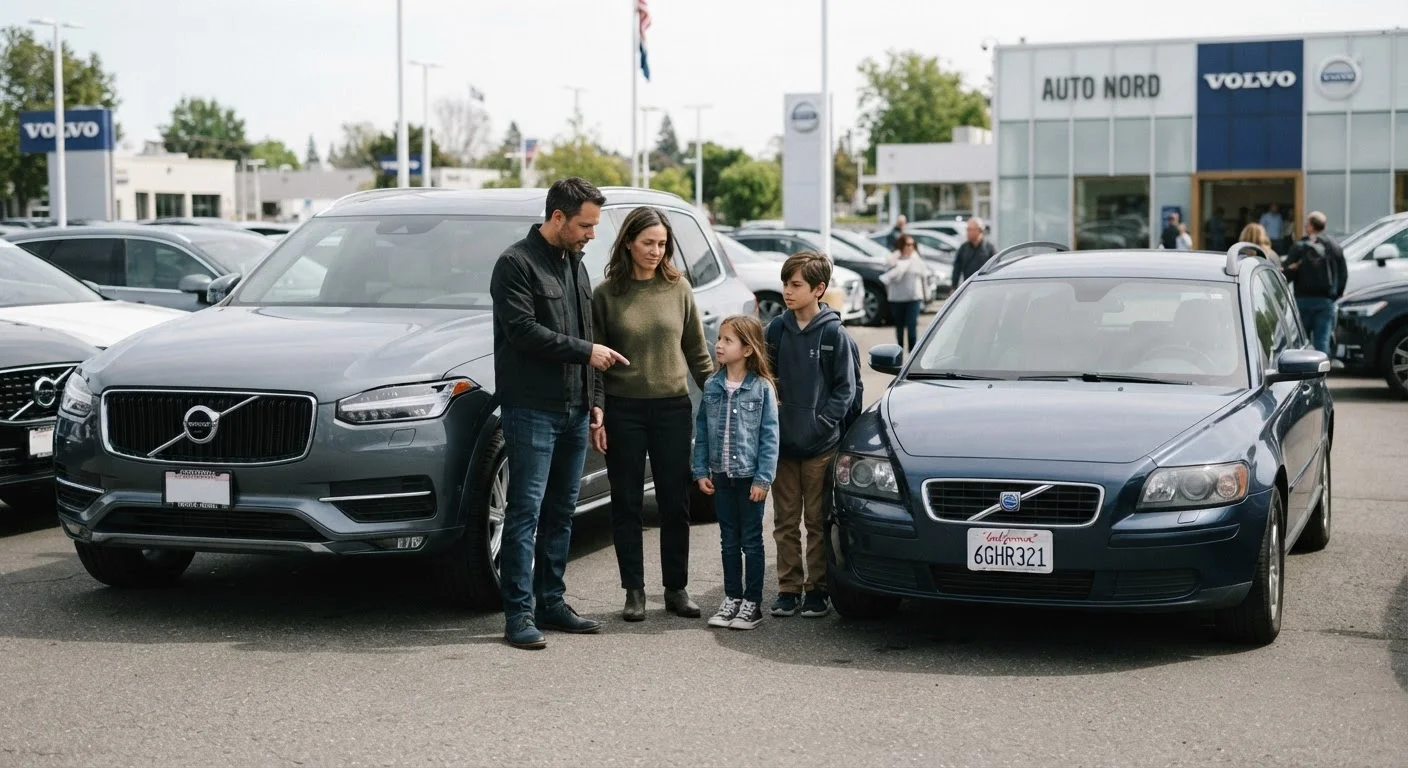
Photo credit: lifestyle-insights.com
In this article
Depreciation, financing rates, warranty coverage, and reliability all factor in. A clear look at the financial differences between buying new and used.
Key Takeaways
- New cars lose a significant portion of their value in the first few years of ownership.
- Used cars typically carry higher interest rates on auto loans than new vehicles do.
- A certified pre-owned vehicle can bridge the gap between new-car warranty coverage and used-car pricing.
- Total ownership cost, not just monthly payment, is the more useful number for family budgeting.
- Reliability history and maintenance records matter more for used vehicles than for new ones.
Depreciation: where the biggest cost difference lives
A new vehicle typically loses around 20 percent of its value in the first year, according to data tracked by automotive valuation services. By year three, cumulative depreciation commonly reaches 40 to 50 percent of the original price. When you buy used, a prior owner absorbs that drop. You pay closer to what the vehicle is actually worth at that point in its life.
That gap is real money. A vehicle that sold new for $38,000 might be available as a three-year-old used unit for $22,000 to $24,000 with moderate mileage. The car is functionally similar but costs thousands less from the start. For families tracking every dollar, that difference can fund other priorities for years.
The flip side is that depreciation also works in your favor when you eventually sell or trade in a new car you have owned long enough. If you keep a vehicle for 10 or more years, the early depreciation loss matters less because you are extracting more total value from the purchase. Understanding how fixed and variable household costs interact helps frame a car payment inside a broader family budget.
Financing rates and the real cost of borrowing
New cars carry lower average interest rates on auto loans than used cars do. Lenders treat new vehicles as lower-risk collateral because their value is easier to verify. Used cars, depending on age and mileage, often attract rates that are one to three percentage points higher.
That spread can offset some of the purchase-price advantage of going used, particularly on longer loan terms. A $22,000 used car financed at 8 percent over 60 months costs more in total interest than a $28,000 new car financed at 4.9 percent over the same period. Running the numbers on total repayment cost, not just monthly payment, gives a cleaner picture.
| Criterion | New car | Used car |
|---|---|---|
| Purchase price | Higher (full retail) | Lower (depreciation absorbed) |
| Depreciation exposure | Buyer absorbs early drop | Prior owner absorbed most |
| Typical loan interest rate | Lower (often 4-6%) | Higher (often 7-10%) |
| Warranty coverage | Full manufacturer warranty | Limited or none (CPO varies) |
| Insurance cost | Higher premiums | Lower premiums |
| Maintenance predictability | High for first few years | Varies by age and history |
| Vehicle history known | Yes, starts at zero miles | Partially, via CARFAX etc. |
Manufacturer financing promotions, sometimes as low as zero percent for qualified buyers, can make a new car financially competitive when the numbers are done honestly. However, those promotions require strong credit and may not be available to every family.
Warranty coverage and maintenance expectations
New vehicles come with a manufacturer warranty, commonly three years or 36,000 miles for bumper-to-bumper coverage and five years or 60,000 miles for the powertrain. That coverage means most repair costs during the early ownership period fall on the manufacturer, not on you.
Used vehicles outside of warranty leave those costs entirely with the owner. A transmission failure on a seven-year-old vehicle is not a minor budget event. Certified pre-owned (CPO) programs from many manufacturers inspect used vehicles and extend coverage, usually for two years or 24,000 miles beyond what remains of the original powertrain warranty. CPO vehicles cost more than standard used, but the added protection can be worth it for families without a large emergency fund.
Routine maintenance costs are similar regardless of whether a car is new or used, though older vehicles may need more of it. Registration fees, insurance premiums, tires, and scheduled service are the ownership costs families most often underestimate when planning a purchase.
Insurance, reliability, and the full ownership picture
Insurance premiums for new vehicles are generally higher than for comparable used models because the replacement cost is higher. Comprehensive and collision coverage on a $38,000 new car costs more than on the same model at $22,000 used. Families on tight budgets sometimes drop comprehensive coverage on older paid-off vehicles entirely, which lowers costs further.
Reliability is harder to generalize. A well-maintained used vehicle with a strong track record can be more dependable than a new model in its first year of production. Checking reliability data from sources like Consumer Reports or J.D. Power by model year, not just brand, is more informative than assuming new means reliable.
When you add depreciation, financing costs, insurance, and likely repairs into a single number, some new vehicles turn out cheaper over a 10-year hold than a comparable used vehicle bought at the wrong mileage point with hidden issues. The math is specific to each situation. Budgeting for the full cost of car ownership, not just the loan payment, is the most practical approach any family can take before signing.

Author
Automotive Editorial Team
Automotive Editorial Team is the collective byline for our editorial team and contributor network. Articles published under this byline or an editorial pen name are researched, written, and reviewed according to our editorial standards for clarity, consistency, and independence before publication.
View all articles →